Trying to make sense of Australia's complex tax system can feel like you're putting together a puzzle, but you're missing half the pieces. For most people, bringing in a professional tax accountant in Melbourne is a smart move. It clears up the confusion, keeps you compliant, and can help uncover potential tax savings you might not find on your own.
Why You Need a Melbourne Tax Accountant

Disclaimer: This article provides general information and does not constitute professional tax advice. Always consult a qualified tax professional for advice specific to your circumstances.
Sure, you can try to handle your own taxes. It’s a bit like servicing your own car—possible, but risky if you don't know exactly what you're doing. Just like a specialist mechanic makes sure your car is running safely and at its peak, a tax expert can provide financial peace of mind. They work to ensure your numbers are accurate, compliant, and structured to support your financial goals in Melbourne's tough economic climate.
This relationship is about so much more than just lodging a return once a year. It’s about building a solid financial strategy. A good accountant is a guide who helps you understand the impact of your financial decisions all year round, not just when the tax deadline is looming.
Maximising Your Financial Position
One of the biggest benefits of hiring a tax professional is their knack for spotting deductions and credits you’re likely to miss. The Australian tax code is a maze of rules covering everything from work-from-home expenses and self-education costs to specific investment property claims.
A sharp accountant knows exactly what questions to ask to get a full picture of your financial situation. This hands-on approach means every single legitimate claim can be found and documented correctly, which may legally reduce your tax bill.
An expert accountant does more than just fill out forms. They provide a forward-looking perspective, helping you structure your financial affairs to improve long-term outcomes and avoid costly mistakes.
Ensuring ATO Compliance
Let's be honest, the Australian Taxation Office (ATO) has strict rules and even stricter deadlines. A simple mistake or a late submission can trigger an audit, attract penalties, and cause a whole lot of unnecessary stress. A tax accountant's job is to make sure your lodgements are spot-on and on time, every single time.
This professional oversight is gold, especially as your finances get more complicated. Whether you're running a business, managing a rental, or dealing with capital gains, an accountant ensures every 'i' is dotted and every 't' is crossed according to the latest legislation. It’s no surprise that over 70% of individual tax returns in Australia are lodged with help from a registered agent. That figure alone shows how much Aussies value professional guidance to get things right.
Gaining Strategic Financial Insight
Beyond just keeping you out of trouble with the ATO, a great tax accountant offers strategic insights that can genuinely shape your financial future. They can offer guidance on considerations like business structures, superannuation planning, and tax-effective investment strategies.
For business owners, this relationship is absolutely critical. Our deep dive into why every business needs an accountant shows just how much they contribute to growth and smart decision-making.
By seeing your entire financial picture, they can give you insights that actually support your goals—whether that’s growing your business, buying a property, or setting yourself up for a comfortable retirement. Their expertise turns tax from a yearly chore into a powerful tool for building wealth.
What a Melbourne Tax Accountant Really Does

A lot of people think a tax accountant in Melbourne is just someone who plugs numbers into a form once a year. While that’s part of it, their real job goes so much deeper. Think of them less as a number-cruncher and more as a financial co-pilot for your business or personal finances.
Their main role is to be an expert navigator through Australia’s maze of tax laws. They translate dense ATO jargon into clear, practical steps, making sure you meet all your obligations while helping you legally keep as much of your hard-earned money as possible. This is way more than just lodging a tax return.
Core Compliance Services
At its heart, the job is about handling the essential paperwork that keeps you on the right side of the ATO. This is the foundation of everything they do, giving you the peace of mind that your financial affairs are in order.
Getting these fundamentals right is critical for every sole trader, small business, or individual with investments. It’s what helps prevent costly penalties or unwanted attention from the tax man down the track.
Key compliance tasks usually cover:
- Tax Return Preparation and Lodgement: Carefully preparing and lodging your annual income tax return, ensuring every dollar of income is correctly reported and every single eligible deduction is claimed.
- Business Activity Statements (BAS): Managing your quarterly or monthly BAS obligations, which involves calculating and reporting Goods and Services Tax (GST) and Pay As You Go (PAYG) instalments.
- ATO Communication: Acting as your official representative with the Australian Taxation Office. They’ll handle any queries and manage all the back-and-forth for you.
Specialised Advisory and Support
Beyond the basics, a skilled Melbourne tax accountant offers support for more complex financial situations. This is where they really prove their worth, helping you navigate big financial moments and tricky investment structures. Their expertise ensures you make smart decisions that line up with your long-term goals.
For instance, selling a major asset or running a super fund requires specific knowledge that most of us just don’t have. A professional guides you through it, preventing mistakes that could have serious financial consequences.
An accountant's true value is unlocked when they move from reactive compliance to proactive advisory. They don't just report on the past; they help you build a stronger financial future.
Modern accountants also use technology to work more efficiently. You can see how things like Robotic Process Automation in Accounting are changing the game, allowing for faster and more accurate service. This tech-savvy approach means they spend less time on manual data entry and more time on high-level strategic advice for you.
Navigating Complex Tax Areas
Some financial areas are notoriously tricky and really need an expert’s touch. A good accountant has the specialised skills to handle these complexities, helping to protect and grow your wealth.
- Capital Gains Tax (CGT): When you sell assets like property or shares, an accountant can figure out your CGT liability and find opportunities to apply concessions or exemptions to potentially reduce the tax bill.
- Goods and Services Tax (GST): They can provide information on whether you need to register for GST, help you understand which sales are taxable, and make sure you claim back every eligible GST credit on your business purchases.
- Self-Managed Superannuation Funds (SMSF): For anyone managing their own retirement fund, an accountant provides vital support with annual audits, compliance, and lodging the SMSF annual return—navigating some of the tightest rules in Australian finance.
Understanding the full scope of what a tax pro does is the first step in finding the right one. You can explore a detailed breakdown of the different accounting and advisory services available to see what lines up with your specific needs.
Understanding Tax Accountant Fees in Melbourne
Let's get straight to the point: what’s this going to cost? It's usually the first question on anyone's mind when looking for a tax accountant in Melbourne, and rightly so. Understanding how fees are structured is the first step towards a good, transparent working relationship.
There's no one-size-fits-all price tag. The cost really depends on how complex your financial situation is and the level of expertise needed to get the job done right.
Think of it like a visit to the mechanic. A standard service has a fixed price, but a tricky engine rebuild will be charged by the hour. Accounting works in a very similar way.
Fixed Fees vs Hourly Rates
For straightforward, predictable jobs, many Melbourne accountants offer fixed-fee packages. This is perfect for things like a standard individual tax return or lodging your quarterly Business Activity Statement (BAS). You know exactly what you're paying upfront, which is a massive help for budgeting and means no nasty surprises down the line.
On the other hand, for more complex or ongoing advice—like strategic tax planning, business advisory services, or heaven forbid, dealing with an ATO audit—accountants usually charge an hourly rate. This model makes sense because the work can be unpredictable, and it reflects the specialist skills needed to navigate unique financial hurdles.
The most important thing here is clarity. A good accountant will be completely upfront about their fees. They'll walk you through their quote, explaining exactly what's included, so you can make an informed choice with no hidden costs.
What Influences the Final Cost
So, what actually shapes the quote you receive? The final price isn't just pulled out of thin air. It’s a direct reflection of the time, skill, and risk involved in managing your financial world correctly and keeping you compliant.
Here are the main cost drivers:
- Complexity of Your Finances: A simple PAYG tax return is quick and cheap. One that involves a family trust, a couple of investment properties, and some capital gains? That’s a different ball game entirely.
- Quality of Your Records: This is a big one. If your records are a shoebox full of crumpled receipts, your accountant has to spend hours sorting it all out. Clean, organised bookkeeping can genuinely save you money on fees.
- Level of Expertise Needed: If you need specialised advice on something like setting up a Self-Managed Superannuation Fund (SMSF) or navigating international tax laws, you're paying for a higher level of expertise, and the price will reflect that.
The infographic below gives you a clear idea of the typical fee structures you’ll come across in Melbourne.
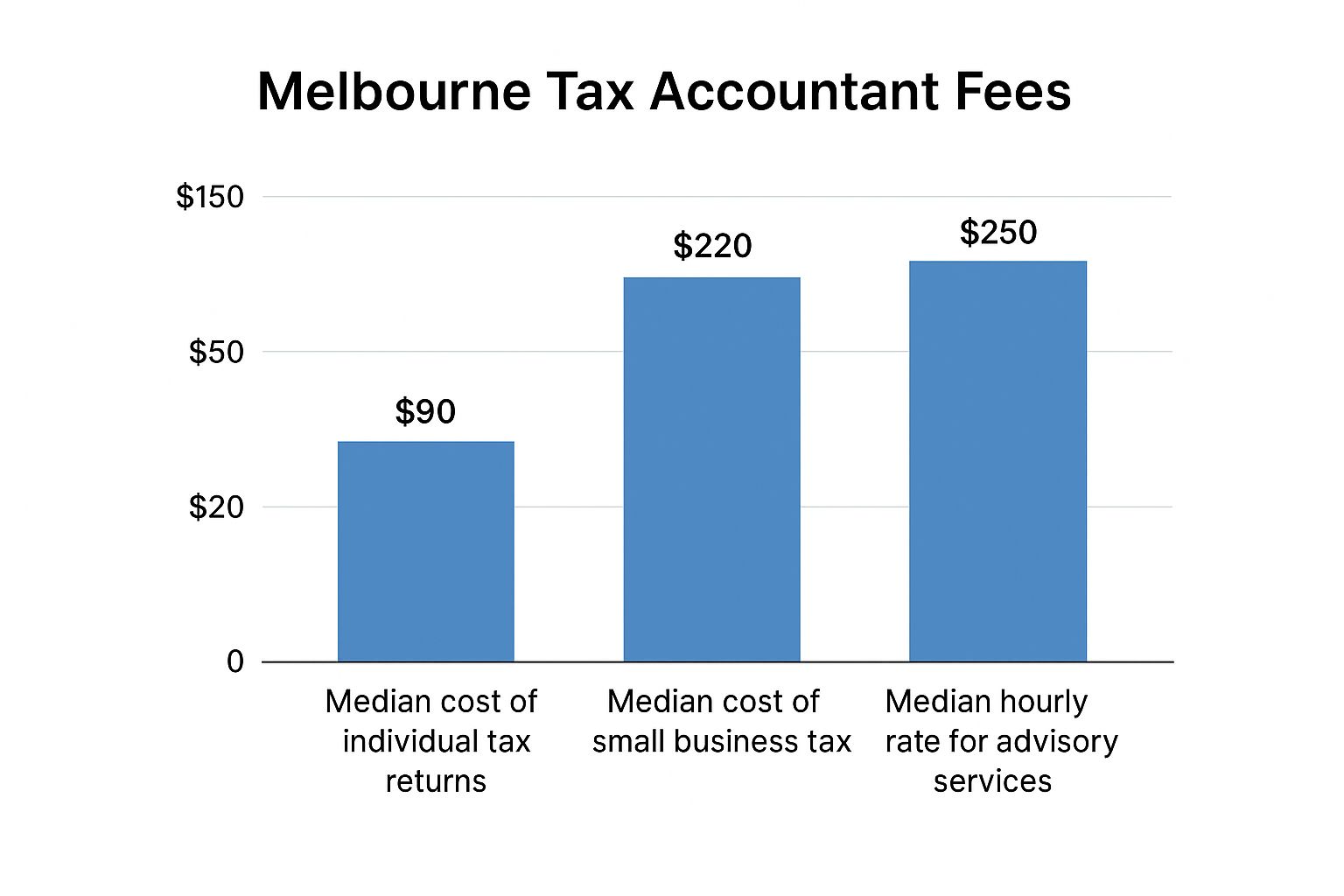
As you can see, there’s a clear difference between what you’d pay for a standard individual return versus the more involved work needed for businesses or strategic advice.
Realistic Cost Ranges in Melbourne
Okay, so what should you realistically budget? This table provides a general guide to give you a clearer picture of typical costs.
This table provides a general guide to the potential costs for various tax accounting services in Melbourne. Prices can vary based on complexity and the specific firm.
Estimated Tax Accountant Fees in Melbourne
| Service Type | Client Profile | Estimated Fee Range (AUD) |
|---|---|---|
| Individual Tax Return | Simple (PAYG, basic deductions) | $150 – $350 |
| Individual Tax Return | Complex (investments, rental property) | $350 – $1,000 |
| Sole Trader Tax Return | Standard business income & expenses | $400 – $1,500 |
| Company/Trust Tax Return | Small to medium business operations | $1,500 – $5,000+ |
| BAS Lodgement | Quarterly, standard business | $250 – $750 per lodgement |
| Strategic Tax Planning | Individuals or businesses | $200 – $500+ per hour |
These figures give you a solid ballpark. For more insights, you can find a breakdown of typical accounting costs on lawpath.com.au.
For business owners, the costs are naturally higher, but it's an investment in getting things right. Remember that fees paid to an accountant for managing your tax affairs are generally tax-deductible, which can help soften the blow.
How to Choose the Right Tax Accountant

Choosing a tax accountant isn't just a box to tick at the end of the financial year; it's a serious financial decision. The right professional becomes a long-term partner in your business journey, so it’s crucial to get it right. Finding the best tax accountant Melbourne has to offer means looking beyond a quick search and really digging into their qualifications, experience, and how they fit with your specific business needs.
Think of it like hiring a specialist tradie. You wouldn't get a general plumber to fix a complex hydronic heating system; you'd find an expert. The same logic applies here. A fantastic accountant for a local cafe owner might not be the best choice for a freelance graphic designer or a property developer.
Verifying the Non-Negotiables
Before you even think about experience or fees, there are some essential credentials every legitimate tax accountant in Australia must have. Getting these basics right protects you from unqualified advice and ensures you're dealing with a true professional who is held to a high standard.
These are the absolute must-haves:
- Registered Tax Agent: This is the big one. Only a Registered Tax Agent can legally prepare and lodge tax returns for a fee in Australia. You can instantly check anyone’s registration status on the official Tax Practitioners Board (TPB) register.
- Professional Qualifications: Look for memberships with professional bodies like Chartered Accountants Australia & New Zealand (CA) or Certified Practising Accountants Australia (CPA). These memberships show a real commitment to ongoing education and high ethical standards.
Don't be shy about asking for their registration number and professional credentials directly. Any reputable accountant will be more than happy to provide this information—it's a sign of their professionalism and transparency.
Assessing Industry-Specific Experience
Once you've confirmed the basics, the next step is to find an accountant who genuinely understands your world. A generic approach to tax just doesn't cut it, especially in Melbourne’s diverse economy. You need someone who speaks your industry's language.
For example, a tax accountant in Melbourne who specialises in the creative arts will know about specific deductions for equipment, grants, and how to handle irregular income streams. Someone focused on property development will have deep knowledge of GST margin schemes and complex capital gains tax issues.
Think about your own field:
- E-commerce and Retail: Needs an accountant who gets online payment gateways, inventory management, and multi-state GST obligations.
- Trades and Construction: Requires expertise in contractor payments, tool deductions, and specific industry reporting.
- Professional Services (e.g., consultants, IT): Needs a pro who is familiar with service-based income, Personal Services Income (PSI) rules, and structuring for the best tax outcomes.
Finding a specialist means you'll get more proactive and relevant insights because they've likely solved the same problems you're facing for dozens of other clients.
Key Questions for Your First Meeting
Your initial chat is more than just a meet-and-greet; it’s an interview. This is your chance to see if their working style clicks with yours and to get clarity on the practical side of the partnership. Coming prepared with the right questions will help you make a confident decision.
Here is a checklist of essential questions to ask a potential accountant:
- Who will be my main point of contact? Will you be dealing directly with the experienced accountant you’re meeting, or will your file be passed to a junior?
- What is your preferred communication style? Do they prefer email, phone calls, or face-to-face meetings? Crucially, how long does it typically take them to respond?
- What accounting software do you use? It's vital to know if they work with the software you use (like Xero, MYOB, or QuickBooks) or if they expect you to switch.
- Can you explain your fee structure in detail? Ask for a clear breakdown of their fixed fees and hourly rates. Make sure you understand what’s included and what will be billed as an extra.
Deciding between a local professional and an online service can also be a key factor. For a detailed comparison, our guide on choosing a tax accountant close to you vs an online accountant can help you weigh the pros and cons. Ultimately, finding the right fit comes down to a combination of proven expertise, clear communication, and a fee structure that feels fair and transparent.
Preparing to Meet Your New Accountant
A great partnership with your accountant kicks off long before you walk into their office. Getting organised for that first meeting isn't just about making a good impression—it's about making the whole process smoother and more affordable for you.
Think of it like seeing a specialist doctor. The more accurate info you can give them upfront, the better their diagnosis and treatment plan will be. Your goal is to paint a clear, complete picture of your financial world from day one. This lets them jump straight into valuable strategic work instead of burning through your budget chasing down missing papers or trying to make sense of messy records.
Your Document Checklist for Individuals
For personal tax returns, the name of the game is income and deductions. Having all your documents ready means your accountant can work faster and help ensure you don't miss out on a single claim you may be entitled to. It's the simplest way to potentially improve your tax outcome.
Here’s a practical list of what to have on hand:
- Income Statements: This is your PAYG payment summary (you can usually find this in your MyGov account linked to the ATO), plus any details of other earnings from bank interest, share dividends, or government payments.
- Deduction Receipts: Get all your receipts together for work-related expenses. This could be anything from uniform costs and self-education fees to home office expenses and travel claims.
- Investment Details: If you own investments, bring along records for any rental properties (income and expenses) and the paperwork showing when you bought or sold shares for Capital Gains Tax calculations.
Essential Paperwork for Businesses
If you're a sole trader or run a small business, you'll need a bit more paperwork. Your accountant needs a full overview of your business's financial health and all its activity for the financial year.
An organised set of financial records is the single best way to reduce your accounting fees. When your accountant can easily find the information they need, they spend less time on basic administration and more time delivering high-value advice.
Your business document checklist should include:
- Bank and Credit Card Statements: Make sure you have the statements for every business account, covering the entire financial year.
- Financial Reports: Your Profit and Loss Statement and Balance Sheet are absolutely crucial. If you use accounting software like Xero or MYOB, even better—you can often just grant your accountant access directly.
- Asset Records: Keep a detailed list of any major assets you bought or sold during the year, including the date and the price.
- Previous Tax Returns: Handing over copies of past returns gives your new accountant a heap of context about your financial history right away.
The Power of Organised Digital Records
Let's be honest, the old shoebox full of crumpled receipts is a thing of the past. Shifting to organised digital files is a total game-changer and can seriously cut down the hours your tax accountant in Melbourne needs to spend on your books. Efficiently preparing for your accountant's meeting is key, and adopting robust document management best practices will make a massive difference.
It can be as simple as creating folders on your computer or using a cloud service like Google Drive or Dropbox. Save invoices, receipts, and bank statements there as soon as you get them. This little habit doesn't just save you a bundle on accounting fees; it gives you a much clearer, real-time view of where your money is going. It’s the foundation for a strong, collaborative relationship with your new financial partner.
Your Top Questions About Melbourne Tax Accountants Answered
Even once you've got a handle on what an accountant does and how they charge, a few practical questions nearly always pop up. Getting straight answers to these common queries is the final step to moving forward with confidence and picking the right tax accountant in Melbourne.
Let's dive into some of the questions we hear most often, giving you the direct answers you need to wrap up your decision-making.
When Is the Best Time of Year to Find a Tax Accountant?
So many people scramble to find an accountant as the October tax deadline looms, but many find it helpful to get in much, much earlier. Ideally, you might consider connecting with a professional between February and May, well before the financial year ticks over on 30 June.
Why so early? Because it allows for proactive tax planning. Engaging an accountant during this window gives them time to look over your finances and suggest things you could discuss before 30 June to potentially improve your tax outcome for that year. These discussions could cover topics like superannuation contributions, prepaying expenses, or the timing of a big asset purchase.
Plus, you completely sidestep the chaotic end-of-year rush. This means your new accountant has the breathing room to properly get to know your situation, giving you their full attention and much more thoughtful consideration.
Can an Accountant Help Me with Overdue Tax Returns?
Absolutely. In fact, sorting out overdue tax returns is a core service for most tax accountants. They have a ton of experience helping clients get back into the good books with the Australian Taxation Office (ATO).
Instead of trying to tackle the stress of multiple late lodgements on your own, an accountant brings a structured, calm approach to the problem.
Here’s their typical game plan:
- Gathering Information: They'll help you pull together all the necessary financial records from previous years, even if your bookkeeping is a bit of a mess.
- Lodging Efficiently: They can prepare and lodge several years of overdue returns, making sure everything is accurate.
- Communicating with the ATO: This is a big one. As a registered tax agent, they can speak to the ATO on your behalf. They can often negotiate to have penalties or interest charges reviewed or remitted, which could result in significant savings.
Think of it like this: bringing in a professional to handle overdue taxes puts a crucial buffer between you and the ATO. They manage the whole process, dial down the stress, and work to get you compliant again with the best possible result.
What Is the Difference Between an Accountant and a Tax Agent?
This is a really important one. The terms "accountant" and "tax agent" get thrown around as if they're the same thing, but there’s a critical legal difference in Australia. Nailing this distinction is key to hiring the right person.
An accountant is a pretty broad term for any professional who works with financial information. They might offer services like bookkeeping, financial reporting, or general business advice. But—and this is the kicker—not every accountant is legally allowed to lodge tax returns for a fee.
A Registered Tax Agent, on the other hand, is an individual or company that has met the specific educational and experience requirements set by the Tax Practitioners Board (TPB). Only a Registered Tax Agent is legally authorised to charge a fee for preparing and lodging your tax returns and Business Activity Statements (BAS).
So, when you're looking for a tax accountant in Melbourne to handle your tax compliance, you must make sure they are a Registered Tax Agent. You can easily check anyone's status on the public TPB register online. This is your guarantee that they’re qualified, insured, and follow a strict professional code of conduct.
Do I Need a Local Melbourne Accountant or Is Online Okay?
Honestly, this really boils down to your personal preference and what your business needs. Both local and online accountants have their own distinct advantages, and one isn't automatically "better" than the other.
A local Melbourne accountant gives you the chance for face-to-face meetings. A lot of business owners find this invaluable for building trust and hashing out complex issues. They also tend to have a deep-seated understanding of the local economic scene and might have specific insights into state-based rules, like payroll tax.
On the flip side, online or remote accountants offer incredible flexibility. You can work with the absolute best expert for your industry, no matter where they are physically. This model usually leans on slick digital communication and cloud-based accounting software, which can make the whole process super efficient.
At the end of the day, the most critical questions are the same for both:
- Are they a Registered Tax Agent with the TPB?
- Do they have real, proven experience in your industry?
- Is their communication style clear, responsive, and easy to understand?
- Is their fee structure transparent and fair?
Whether you choose a local expert down the road or an online firm, making sure these fundamentals are locked in is what will make or break the partnership.
At Genesis Hub, our mission is to provide clear, actionable information that empowers Melbourne's small business owners. If you're ready for a proactive accounting partner who is genuinely focused on your growth, book a free, no-obligation consultation today. Let’s talk about how we can help you stay compliant, improve your financial position, and smash your business goals. Explore our services at https://genesishub.com.au.